
Manual watering is slow and inconsistent; one dry spell or overwatered bench can wipe out a crop. Greenhouse irrigation automation fixes that by delivering the right amount of water, to the right zone, every time.
Whether you run a small nursery or a large commercial greenhouse, greenhouse irrigation automation is one of the smartest investments you can make. It saves water, cuts labor, and helps your crops grow more consistently — all at the same time. This guide breaks down how automated systems work, which technology fits your operation, and what to look for when getting started.

How a Greenhouse Irrigation System Works
Four parts work together in any automated irrigation setup. Understanding each one helps you build a system that actually fits your operation — and scale it as you grow. Here’s a quick breakdown, with links to Link4’s environmental control sensors and controllers for more detail.
1. The Controller — The Brain
Tells your system when and how much to water. Ranges from basic digital timers to smartphone-managed smart systems. Commercial options like Argus Controls and Priva integrate with fertigation and climate systems.
2. The Actuators — The Muscle
Solenoid valves and pumps physically control water flow. Solenoids work for pressurized systems; pumps suit reservoir-based setups.
3. The Delivery System — The Plumbing
How water gets to your plants. Common options:
• Drip lines — targeted, low-waste, great for row crops
• Misting nozzles — propagation and high-humidity zones
• Soaker hoses — simple, affordable for ground beds
• Ebb and flow — flood tables for ornamentals and cannabis
4. The Sensors — The Feedback
What turns a timer into a smart system. Sensors feed live data back to the controller so it adjusts on the fly — based on actual conditions, not a fixed clock.
Which Delivery Method Fits Your Greenhouse Automation Setup?
Drip Irrigation: Best for tomatoes, peppers, cucumbers. Delivers water to the root zone, minimizes leaf wetness, and reduces disease pressure. Works well with rockwool, coco, and perlite.
Overhead / Boom: Best for seedlings and plug trays. Covers large areas fast. Wet foliage increases fungal risk — pair with good airflow.
Ebb & Flow: Ideal for potted ornamentals, herbs, and cannabis. Bottom-up watering reduces foliar disease and improves root health.
Misting / Fogging: Essential for propagation rooms and tropical plants. High-pressure fog cools air without soaking foliage — a big advantage in hot climates.
Levels of Greenhouse Control Systems
Not every grower needs the same system. Start where your budget allows and scale up. Many Link4 clients begin at mid-level and expand as they grow.
Entry Level — $50–$500
Basic digital timers. Good for hobbyists and small operations just getting started. No sensor integration.
Mid-Level — $2,000–$15,000
Sensor-driven controllers. The sweet spot for small to mid-sized commercial operations. Adjusts watering based on real conditions.
Professional / IoT — $15,000–$150,000+
Full AI and IoT-powered systems. Built for large commercial operations and research centers. Integrates with climate, lighting, and fertigation.
Sensors That Power Greenhouse Irrigation Automation
Sensors are what separate a timed system from a smart one. Michigan State University recommends VPD-based scheduling as one of the most effective ways to improve water use efficiency in controlled environments. Here’s what to use and why:
Substrate Sensors
• Capacitive — accurate, durable, measure volumetric water content
• TDR (Time Domain Reflectometry) — high precision, great for research
• Avoid resistive probes — they corrode fast and give unreliable readings
VPD Monitoring
High VPD means plants are transpiring fast and stressed. Pairing VPD data with your irrigation schedule prevents yield loss before it happens.
PAR (Light) Sensors
More light = more water demand. PAR sensors tie irrigation events to actual plant activity rather than just a fixed schedule.
Maintenance Basics for Greenhouse Irrigation Automation
Daily
• Check for leaks at fittings and emitters
• Monitor water pressure readings
• Confirm filters are clear
Monthly
• Calibrate pH and EC sensors
• Flush lines to remove sediment buildup
• Review and update controller schedules based on crop stage
⚠ Watch Out For: Biofilm
Clogged emitters are usually caused by biological buildup, not just sediment. Use monthly acid flush treatments and disinfect your entire system between crop cycles.
How Link4 Controllers Support Greenhouse Irrigation Automation
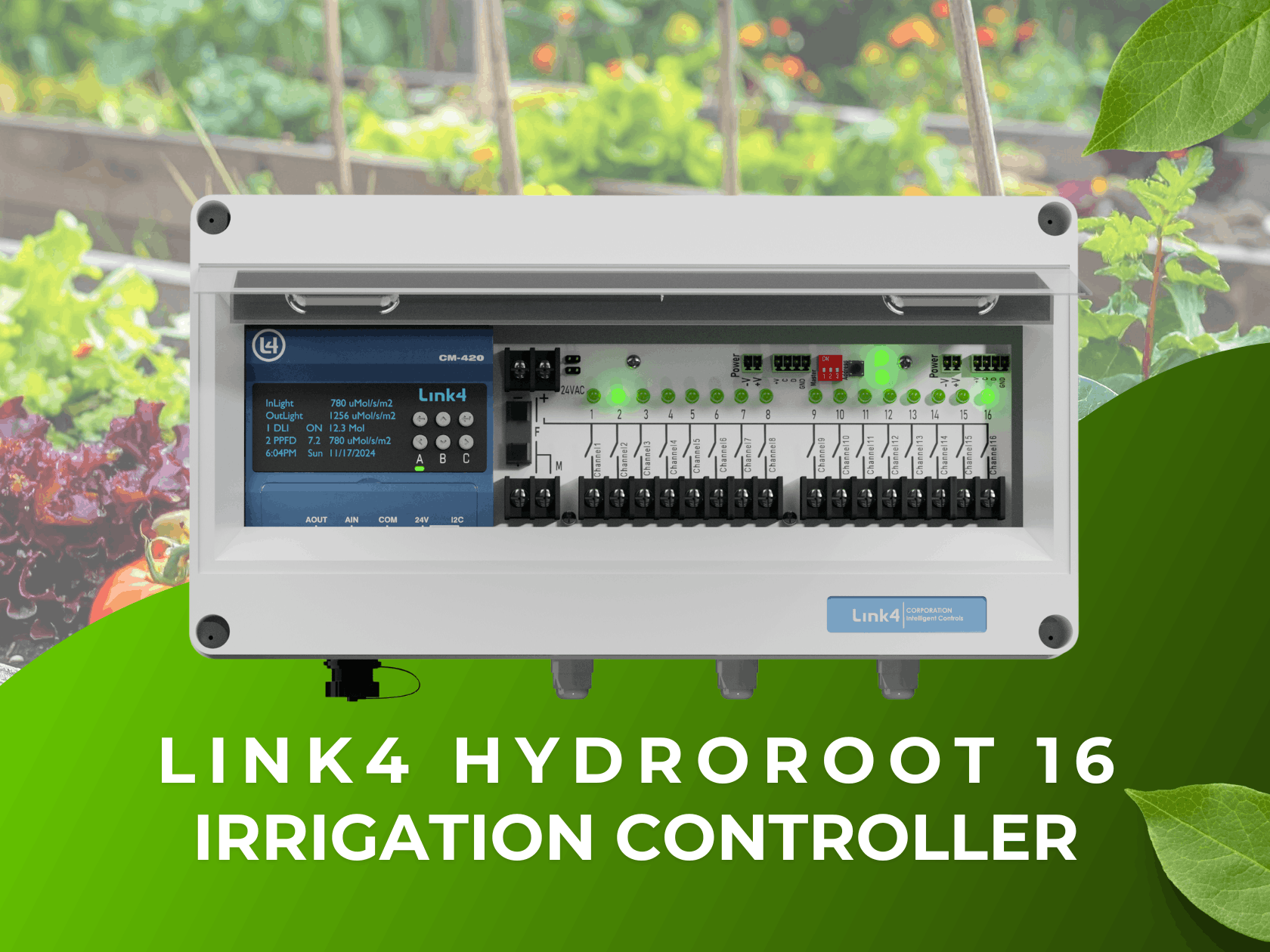
Link4 builds custom greenhouse irrigation automation systems for commercial growers of all sizes — from nurseries and research centers to large-scale hydroponic and aquaponic facilities. Our new HydroRoot controller is designed just for irrigation control, including VPD monitoring with a temperature and humidity sensor. We also have the Pearl controller, which gives you full control over your environment, including irrigation, lighting, and more.
🌱 Ready to build a smarter watering system? Request a free consultation with a Link4 specialist to design the right greenhouse irrigation automation setup for your crops and budget.
Whether you’re starting from scratch or upgrading an existing system, the right automation setup pays for itself quickly — through labor savings, lower water costs, and fewer lost crops. The sooner you get it dialed in, the sooner you see the difference.